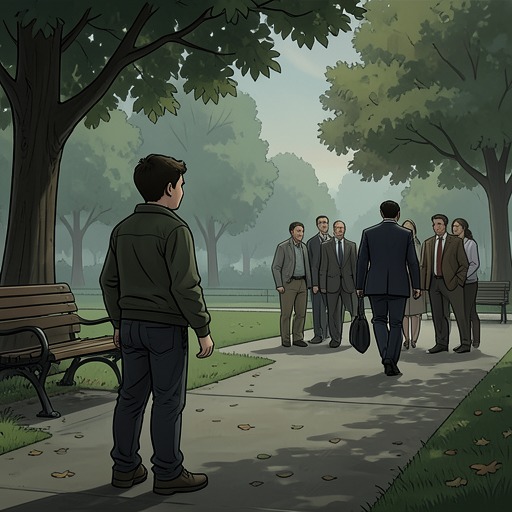
Daeshim Discovers Trey Is His Son
The Secret of SecretsDaeshim Discovers Trey Is His Son is the central paternity revelation that changes the meaning of Daeshim’s eight-year separation from Nyia Crosland. What had seemed to be a lost interracial romance becomes the history of a child raised without his father, while Daeshim’s private guilt acquires a living face and a name: Trey. The disclosure does not merely answer a question about biology; it forces Daeshim to confront the consequences of abandoning Nyia under pressure from his traditional Korean family and establishes the possibility of a family he once believed he had permanently lost.
Causes and Background
The revelation is rooted in the relationship Daeshim and Nyia began while attending North Carolina Central University. Their romance developed with unusual intensity: they spent their free time together, attended concerts, movies, and poetry slams, and treasured quiet dinners at Daeshim’s apartment. Nyia regarded Daeshim as the man against whom all later relationships would be measured. They even discussed marriage, although her uncertainty about his commitment was sharpened by his reluctance to let her meet his parents.
That reluctance concealed the decisive obstacle. Daeshim’s parents opposed his relationship with Nyia because she was Black, and Daeshim understood that their traditionalist expectations were connected to their Korean family values. Nyia tried to meet the situation with patience rather than pressure. She enrolled in an online class about Korean culture after they met, hoping to understand the world Daeshim came from if he eventually introduced her to his parents. Her willingness to learn impressed him, but it did not overcome the family’s opposition.
Daeshim’s education gave his parents practical power over his decision. His father threatened to withdraw financial support unless Daeshim cut all ties with Nyia, while Daeshim’s scholarships and loans were insufficient to cover his expenses. Although Daeshim initially resisted, he ultimately left school without telling Nyia and disappeared from her life. Years afterward, he recognized that he had chosen dependence and professional security over the woman he loved. He remained ashamed that he had not defended her when his parents made disparaging comments, and he understood that the separation had deprived him of more than a romance.
What Happens
The paternity conversation occurs after Daeshim has found Nyia again through a magazine photograph. While working on a case, he saw her picture in a magazine a detective was reading, recognized her, and tracked her to Chantel Fifty. The photograph becomes a physical link between the lost past and the present: Daeshim carries the rolled-up magazine with him for nearly two weeks before showing it to Nyia. Once they are together, the existence of the child becomes the subject neither of them can avoid.
Daeshim asks about the boy, and Nyia explains that she did not know she was pregnant when he left. She also tells him that she tried to find him after learning about the pregnancy because she believed he had the right to know that they were expecting a baby, even if he no longer wanted her. Her explanation reveals the asymmetry of their separation: Daeshim experienced the loss as a consequence of his cowardice, while Nyia carried the pregnancy and entered motherhood without the partner who should have shared it.
Daeshim first seeks confirmation directly, asking whether the child is his. Nyia answers that he is, identifies him as Trey, and states that he is eight years old. The number gives the revelation its full weight. Daeshim has not missed an abstract period of childhood but eight years of concrete milestones, ordinary days, and irreplaceable moments. He collapses onto the couch, pulls his hands through his hair, and cries as he realizes that his parents’ pressure and his own surrender have kept him from knowing his son.
The discovery is therefore both an admission of fact and a reversal in Daeshim’s self-understanding. He had spent years comparing other women with Nyia and trying to push Nyia out of his thoughts. His friend Ricky Graham notices his guardedness and asks about her, but Daeshim initially refuses to discuss the subject. The paternity revelation breaks that avoidance. The past he has tried to contain now includes a child whose entire life has unfolded outside his knowledge.
First Meeting with Trey
The truth becomes emotionally real when Nyia opens the door and Trey enters the room. Daeshim studies the boy from his curly head to his toes and recognizes a striking resemblance, describing Trey as being like a mirror image of himself apart from the curls Trey inherited from Nyia and his golden-toast complexion. The visual recognition reinforces the verbal confirmation, turning the question of paternity into an immediate encounter between father and son.
Daeshim greets Trey cautiously in Korean and English. Trey returns the greeting, and Daeshim tells him, in Korean, that it is nice to finally meet him before opening his arms for a hug. Trey does not immediately rush forward. Instead, he turns to Nyia for permission, acknowledging her authority as the parent who has protected and raised him. Nyia gives a single curt nod, and Trey falls into Daeshim’s embrace.
The embrace joins all three characters in a moment that neither the earlier romance nor the years of absence could provide. Nyia and Daeshim are both crying, and neither attempts to hide the tears. Daeshim holds Trey, then opens one arm to bring Nyia into the embrace as well. He understands himself as a father at last and vows internally to ensure that Trey and Nyia never want for anything. The scene changes the value of the family from something lost to something newly possible, although it cannot erase the years already gone.
Consequences and Aftermath
Daeshim’s response to the revelation quickly becomes practical as well as emotional. He begins taking photographs and videos of family moments and announces that he will send them to his parents. He wants them to see what their earlier opposition caused him to miss. The decision marks a major change in his relationship with them: the young man who once depended on their money and obeyed their prohibition now openly defies their wishes by claiming his son and presenting his family to them.
The confrontation with his parents continues after Daeshim moves back to Durham permanently. His transfer from Charlotte takes another month because of open cases and paperwork, followed by two weeks spent moving his belongings. Once settled, he introduces Nyia to Ricky Graham, his best friend and lab partner, and to Ricky’s wife, Tish. Their warm reception extends the reunion beyond the romantic couple and recognizes Nyia and Trey within Daeshim’s wider circle.
Daeshim’s return also changes the practical structure of Nyia’s life. Julius Crosland continues helping to watch Trey when Nyia and Daeshim work, while Chantel Daniels remains willing to let Nyia bring Trey to work when necessary. Daeshim now shares the childcare that Nyia had previously carried as a single mother. The support of Julius, Chantel, the Chantel Fifty staff, Ricky, and Tish shows that Trey’s family is sustained not only by biological connection but also by a network of dependable care.
Daeshim’s parents eventually visit to meet their grandson, a few days after receiving his message. He initially tries to avoid their calls and texts, but answers before dinner and refuses to let them control the terms of the conversation. When his father asks whether he is certain Trey is his, Daeshim answers unequivocally that Trey is his. The answer is more than a response to doubt: it is Daeshim’s public acceptance of fatherhood and his rejection of the authority that once separated him from Nyia.
Narrative Significance
The event combines a discovery plot with a second-chance romance and a family-reconciliation arc. Its power comes from the gap between what Daeshim and Nyia once imagined and what actually happened. They had discussed marriage, yet Daeshim left without knowing that Nyia was pregnant. Nyia had tried to reach him, but he was absent during the pregnancy and the first eight years of Trey’s life. The revelation therefore converts romantic regret into parental responsibility.
The scene also gives physical form to the book’s conflict between family loyalty and personal moral choice. Daeshim loves his parents and acknowledges that they treated him well in other respects, but he recognizes that their prejudice and financial control shaped the decision that destroyed his first family. His later decision to send them photographs, move back to Durham, and insist that Trey is his demonstrates a new boundary: family tradition may explain his earlier failure, but it no longer governs his conduct.
Most importantly, Trey is not treated as a plot device who simply resolves the lovers’ separation. His cautious request for Nyia’s permission, his first exchange with Daeshim, and Daeshim’s grief over the years he missed establish Trey as a person whose life has been shaped by the adults’ choices. Daeshim’s discovery matters because it obliges him to become present, not because it automatically repairs the past. The first embrace begins that work; the later caregiving, relocation, and confrontation with Daeshim’s parents show the revelation developing into a sustained commitment to Nyia and Trey.